Author: Rob Hamm

Autoclave Manufacturer: Customization


How working with a Custom Autoclave Manufacturer can help you with autoclave projects in existing buildings.


Whether you need vivarium autoclaves for your animal-related research facility or standard laboratory sterilization equipment, you may run into the option of buying a prefabricated unit or having your equipment custom-made. In a few respects, working with a custom autoclave manufacturer can be more advantageous if you are in an existing building than buying standard pieces. 

Cost-Efficiency for Specialty Autoclave Applications

Working with a custom autoclave manufacturer specialized in customized equipment delivers cost efficiencies for specialty autoclave applications. While you can find quite a few standard autoclaves with the most expected features, these units may not always cater specifically to your building or operation. In addition, opting to have a new autoclave retrofitted with additional features may not always be the most cost-effective option.

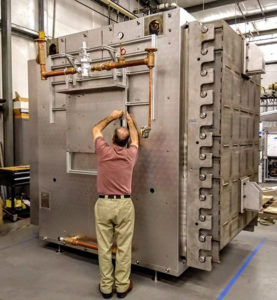
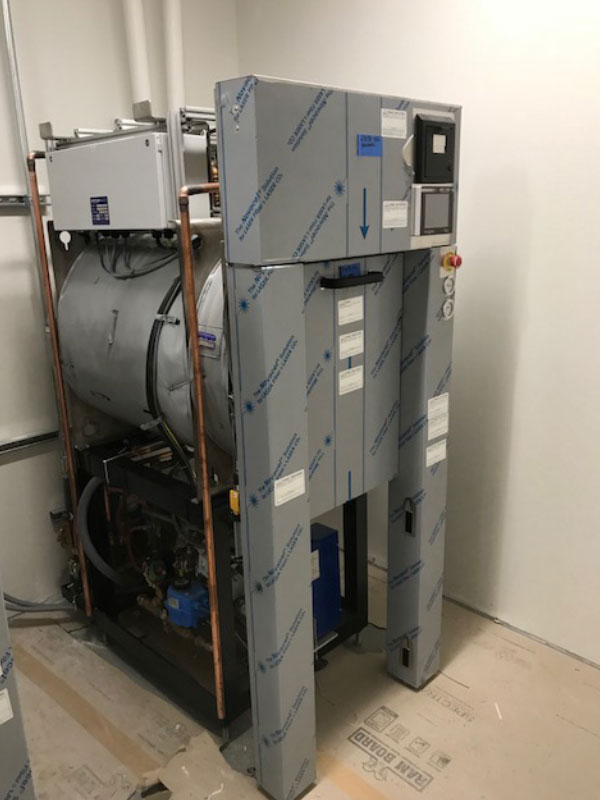
Instead, you are far better working with an engineer from a custom autoclave manufacturer to design the unit around your needs and with the features that coincide with daily use within your building. For example, if you need an autoclave with split bulk sterilizers (see illustration below), unique cycling capabilities, and a ventilation system that connects to your existing ventilation outlet points, a customized unit can be designed from the ground up. Therefore, post-manufacturing reconfigurations and adjustments will not be involved, and you can spend less to get the equipment you need. 

Get Larger Sterilization Equipment Manufactured and Installed, in Spite of Constraints in an Existing Building 

Certain autoclave projects have specific challenges that can only be efficiently addressed through engineering a customized piece of equipment. For example, if a company needs a large autoclave and operates from an existing, multistory building, buying a prefabricated unit can bring along hard-to-overcome quandaries. Many of these challenges will come into play during the installation process, such as: 

  • Elevator weight capacity restrictions or size limitations 
  • Restrictive hallway layouts that prevent adequate maneuverability of the equipment 
  • Doorway width and height limitations 
  • Problems with creating an adequately sized pit for installation

These types of challenges are hard to avoid in an existing building and can dramatically increase project costs. With our expertise in a custom approach, we developed the Split Bulk Sterilizer to eliminate all of the issues previously defined. While Beta Star does manufacture some standard sizes in batch lots, such as the LSII 20-inch by 20-inch or the 26-inch by 26-inch by 39-inch, our larger sizes are custom-made. 

Take Advantage of Custom Autoclave Manufacturing with a Streamlined Approach

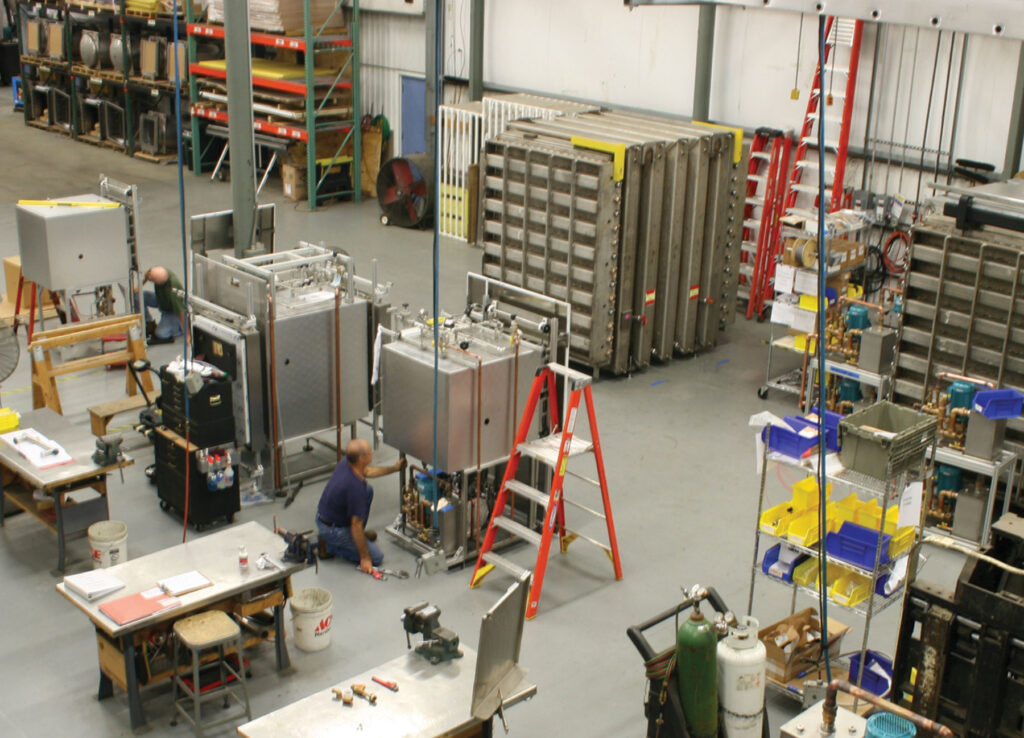
Our integration with R-V Industries here at Beta Star Life Science Equipment has given new life to our manufacturing processes. R-V Industries actually specializes in custom manufacturing, and we’ve streamlined our own operations to coincide. When you opt for our services as your custom autoclave manufacturer, we provide: 

  • Engineering flexibility to get clients the autoclave sterilizers they need 
  • Carefully thought-out manufacturing plans utilizing the valuable insight of industry engineers 
  • Timely project efficiency with our in-house project scheduling department to ensure efficiency
  • A dedicated project management team to support client updates throughout the manufacturing process

We pride ourselves on delivering sterilization equipment that can suit even the most unique floorplans, usage objectives, or layouts. To find out more about our custom manufacturing processes, reach out to us


More Autoclave Manufacturer Topics to Know

For more information about what to consider when selecting an autoclave manufacturer, visit the Autoclave Manufacturer post or any of the subtopics listed below:


Autoclave Manufacturer: Avoiding Metal Contamination


Can You Use Stainless and Carbon Steel
for Autoclave Manufacturing?


As one of the top autoclave manufacturers in North America, Beta Star life science sterilizing equipment is engineered and built to exacting standards with only the highest-grade materials available. That’s why all of our autoclaves are exceptionally reliable, highly adaptable, easy to use, and the equipment of choice in the laboratory, biotech, and pharmaceutical industries. Being a premier autoclave manufacturer means that every Beta Star sterilizer is able to handle the most demanding jobs, while minimizing downtime and maintaining dependability cycle after cycle. How do we do it? It all starts with stainless steel.

The “Riddle of Steel”

steel stacked and ready to be used by an autoclave manufacturer
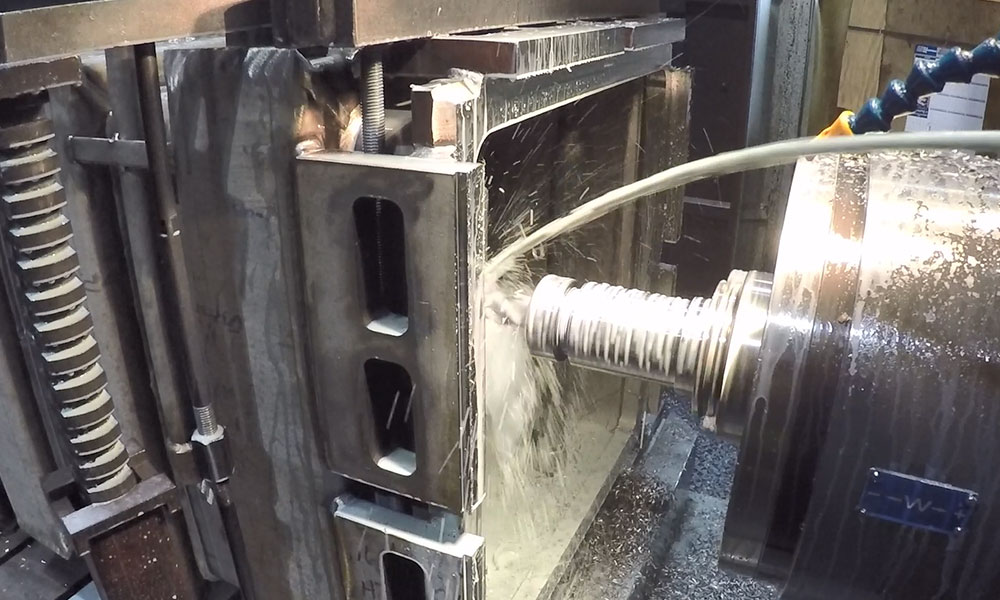
All Beta Star autoclaves start as steel plates, which are then bent, cut, machined, and welded to manufacture the finished autoclave in your facility.

Steel is actually an entire family of metal alloys, with hundreds of application-specific grades. However, for this comparison we are only concerned with two different categories: stainless steel and carbon steel. Although stainless steel and carbon steel both contain the same basic ingredients of iron and carbon, their main difference is alloy content. Carbon steel has less than 10.5 percent alloy content, while stainless steel must contain 10.5 percent of chromium or more. It is this essential difference that gives the two steels their distinct physical characteristics – and why Beta Star only uses 100 percent stainless in its autoclave manufacturing.

In general, steels with higher carbon content (carbon steel) are hard and brittle, while steels with lower carbon content (stainless) are able to deform without losing toughness, are pliable, and can sustain significant plastic deformation under tensile stress before failure. In short, this means a significant difference in expansion and contraction rates between the two steels. Stainless steel can expand 34 percent more than carbon steel, which is a critical consideration when deciding which steel to use for an autoclave steam jacket.

The Problem With Rust for an Autoclave Manufacturer

Stainless steel is specifically designed to resist moisture or atmospheric induced oxidization. It contains a minimum chromium content of 10.5 percent by mass, which creates a protective barrier between environmental oxygen and the metal’s iron content. This prevents any corrosion or rust development. It is for this simple reason that Beta Star only builds autoclaves with a stainless steel jacket.

Carbon steel does rust and corrode when exposed to moisture because it lacks the corrosion-resistant properties contained in stainless steel. Due to the missing chromium in carbon steel, it does not last as long as stainless steel, nor does it withstand extreme temperature changes without damage. Even small amounts of moisture, including atmospheric vapor, will cause carbon steel to rust. Since carbon steel can be damaged from moisture exposure, in certain situations steam will degrade the material at rates of 0.05 inches per year in extreme use environments.

While maintaining autoclave chamber integrity is easy given the ability to clean inside the chamber, the same cannot be said about outside the chamber between the carbon steel jacket. Since that cannot be cleaned, rust residue continues to accumulate on those surfaces. Over 15 years (which is the industry standard chamber warranty) it could result in a three-quarters of an inch erosion of carbon steel – which is far thicker than any jacket material. Ultimately this leads to failure of the autoclave’s carbon steel jacket, with all of the associated consequences.

Beta Star Manufactures Better

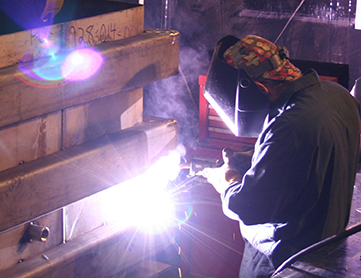
All Beta Star autoclaves come with a 100 percent stainless steel chamber and jacket, and are welded, assembled, completed, and acceptance tested through a full cycle in a facility that handles only stainless and alloy metals. This prevents any cross-contamination during the manufacturing process. Using only stainless steel, our small, medium, and bulk throughput autoclave chambers can regularly hold up to 12,960 pounds of force on just the chamber door alone, safely maintaining vital structural integrity. Some manufacturers use stainless steel chambers inside but carbon steel jackets outside. This puts additional stresses on joint welds because of the two different materials, which then become potential weak points. So when it comes time to choose your next autoclave, think simple, reliable, stainless, sterilization solutions from Beta Star.


Take Advantage of Custom Autoclave Manufacturing with a Streamlined Approach

For more information about what to consider when selecting an autoclave manufacturer, visit the Autoclave Manufacturer post or any of the subtopics listed below:


Article Sources

Autoclave Manufacturer Questions


What to know about the manufacturing process before you select an autoclave manufacturer.


Selecting the right autoclave manufacturer can be a daunting task. For any facility, regardless of its size, the autoclave purchase decision is a substantial decision with expected lifespans that can easily cross ten years if properly maintained. Autoclaves also serve a valuable purpose. They are commonly the deciding factor between whether research or product is usable or unusable. An issue during the sterilization process can render research, production equipment, or the final product, useless because the risk of outside contaminations is too great.

Despite the autoclave’s importance, we find many of our customers are unaware of how subtle differences in the manufacturing process and finished autoclave can affect their experience with the autoclave. At Beta Star, we’ve carefully thought over countless steps of the manufacturing process to ensure it delivers the best possible autoclave. This ensures that our autoclave delivers on the things our customers care about the most:


Common Autoclave Manufacturer Questions


These questions are complex and require a detailed answer. Commonly, the answers to these questions have roots in the manufacturing process. Understanding the autoclave manufacturing process allows you to make the most informed decision, and thus the best decision for your facility. The articles below, developed by the Beta Star team, will give you a great understanding of the different subtleties of the manufacturing process. And, while the topics below are subtleties in manufacturing, they have a significant impact on the autoclave itself.