
Autoclaves in Biohazardous and Infectious Environments
The need is not new. Since the dawn of medical research, a need for reliable disposal of biomedical, biohazardous, and infectious waste has existed. For many universities and research laboratories, the simple solution has been to hire a processing company and be done with the disposal process as soon as that supplier takes the waste. However, there are a multiple issues to consider before the next annual contract is signed with the biomedical waste management company.
Variable vs. Fixed Spending
The continued utilization of biomedical waste management companies leaves universities and commercial organizations exposed to the variability of operating expenses. Contract costs fluctuate with gas prices, insurance rates, and mark-up costs that multi-level logistics organizations charge.
Conversely, purchasing autoclaves for high-output facilities allows a fixed spending plan with multi-year amortization to defray the investment costs over several years. The multi-year amortization plan replaces the varying expense of the waste management contract. To protect your investment, Beta Star autoclave chambers are able to be covered under a 15-year warranty against the loss of chamber integrity.
Schedule Dependency and Lost Efficiencies
Building a streamlined approach to disposal of biomedical waste fulfills the research cycle from start to finish. Relying upon third-party organizations for waste disposal creates a high risk bottleneck that threatens your research process and facility’s safety. Conforming to a third party’s schedule requires you to create storage for biomedical waste, in its contaminated state, at your facility. Scheduling and pick-up costs necessitate storage of dangerous waste until enough waste is accumulated to financially and logistically warrant a pick-up. During this time, your organization opens itself up to accidental exposure caused by the mishandling and mismanagement of waste. An autoclave provides your staff with a way to immediately sterilize biomedical waste on-site, and lowers the number of dangerous movements of medical waste in biomedical waste bags (a.k.a. the “red bags”).
Meeting Legislative and Organizational Requirements

Biomedical “Red Bag” Waste Ready for Autoclaving
Legislative regulations on biomedical waste first started in 1984 when the United States Environmental Protection Agency (EPA) enacted the Hazardous and Solid Wastes Amendments (HSWA) to prohibit the land disposal of hazardous wastes while the wastes remained hazardous. Subsequently, the Medical Waste Tracking Act (MWTA) of 1989 was also enacted by the US EPA to reduce medical waste that was being disposed of at sea and washing up on East Coast beaches. The MWTA lasted for 2 years, until 1991, when the act expired and legislature controlling medical waste sterilization and disposal was picked up by state legislatures.
For our purposes, we will look at the requirements put forth by California’s Department of Public Health, and the approved methods it defines. As one of the strictest legislative states in the United States, California sets a good benchmark for biomedical waste disposal. Section 118215(c) of California’s standards and acceptable processes outlines standard processes for converting medical waste to solid waste, where it can be disposed of through approved and inexpensive trash removal methods. Of the limited standard options, sterilization through the use of autoclaves (referred to as steam sterilizers in the legislation) is listed with clearly defined operational outlines for time, temperature, pressure, and container type.
We Want to Help
At Beta Star, we’re passionate about research. More importantly, we understand the importance of protecting your research and the people inside your facility. As a custom designer and manufacturer of autoclaves, we want to work with you to provide a solution for efficient and thorough sterilization of biomedical waste in your facility. Get in touch with us today!
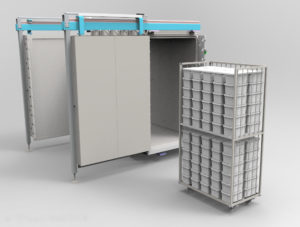 A sterilizer is any piece of equipment that is used to destroy all living organisms within the chamber through the use of specifically programmed sterilization cycles. By definition, Webster’s defines a sterilizer as a piece of equipment used to destroy microorganisms in or on, usually by bringing to a high temperature with steam, dry heat, or boiling liquid. However, there are a broad range of processes used for sterilizing: